 Roguedex
Part 5 (Jul 2026) · #2 of 3 in that tierWatch the moment (0:42:54)
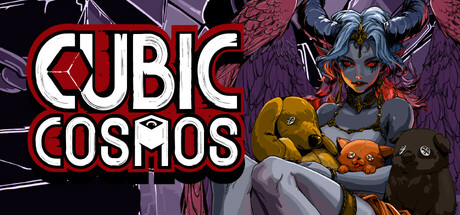
Cubic Cosmos
- Developed by
- Inkstone Atelier
- Published by
- Inkstone Atelier
$12.99
Cubic Cosmos is a thrilling fast-paced roguelike card game. You have been trapped in a deadly game. One wrong move could see you reduced to a plaything of the goddess. Can you free yourself from the endless cycle and escape your fate?
Consensus
C69.9/100
Steam players92% positiveVery Positive1,003 reviews
VG Insights estimate ↗≈67.9K copies · ≈$593K gross
What creators say
What players say
A fast-paced roguelike deckbuilder with tower-defense-style lane combat (monsters attack back to front) from Inkstone Atelier, built around run-long stat stacking and explosive combo chains.
Cubic Cosmos is a low-profile but well-liked indie: Steam shows about 1,000 reviews at roughly 92% positive (Very Positive), with recent reviews noticeably weaker (about 68% of a small recent sample). Players praise its permissive, break-the-game synergy building, the run-long scaling of cards and a generous amount of content (12 heroes, 240+ cards). The main sources of negative sentiment are undisclosed generative-AI card art, a sense that the game is easy/repetitive once a build snowballs, and unclear UI/keyword explanations. It launched in Early Access on Sept 16, 2025 and had its 1.0 launch on Apr 28, 2026, with the dev apparently still patching (an earlier reviewer flipped to positive citing steady improvements). No critic coverage exists on Metacritic (page has zero critic reviews) and nothing turned up on OpenCritic.
Players love
- Anything-goes synergy building: players love assembling absurd, over-the-top combos and scaling to huge numbers, and like that the game does not try to cap power the way Slay the Spire-style games do
- Stat boosts from spells, monsters and events last for the whole run, so cards genuinely grow and you plan around growing specific units
- Selling cards in shops (about 50% value) instead of paying to remove them eases RNG pressure and encourages pivoting builds
- Lots of content and variety: 12 heroes across 3 classes with distinct synergies, 240+ cards, 50+ relics, multiple modes and 10+ difficulty levels
- Strong 'one more run' pull; several reviewers report 25-60 hours and one 260+ hours
- Satisfying combo chains with lots of animation and effects going off; the game feels powerful from the very first run
- Doll Code system lets you export cards and share/receive others' pawns and replays, adding a light meta layer
- Low price ($12.99) relative to the amount of content, frequently cited as great value
Common complaints
- Undisclosed generative-AI card art is the top complaint: the two most-upvoted negative Steam reviews (93 and 125 helpful votes) cite odd fingers, repeated poses and 'obviously AI' cards, and people say they feel misled
- Game is easy and repetitive for some: one reviewer beat the top difficulty with every character without a loss, with decks effectively locked in by the first boss
- Heroes are said to play too similarly, with hero abilities easy to ignore (only a couple felt truly distinct to that reviewer)
- Stat stacking has little downside, so builds converge on a few stat enablers plus a few hard hitters
- UI/readability gaps: card types (artifact vs sorcery etc.) are unclear, keyword phrasing is odd, and many things are left unexplained
- Chain reactions can be too fast or opaque to follow, leaving some players confused about why their board was wiped
- Technical rough edges: game freeze when starting a new run (pinned Steam workaround), buggy controller support, poor text on Steam Deck, a Linux launch failure (no native Linux build), a reported crash
- Repetitive, looping music mentioned by a reviewer
Can feel tedious
- Undisclosed AI art (some buyers refunded or wrote negative reviews purely over this)
- Feeling the run is decided early, then just watching the deck play out
- Long chains of auto-triggering effects that some find hard to follow
- Having to learn unusual keyword terms (mobility, auto, death, lasting, charge) before the game clicks
- Steam-page tags/marketing: players who expected a roguelite with persistent power-up meta-progression felt misled, since the dev reportedly said it is not meant to have that (though the game does have XP-based unlocks of cards/characters)
What's unique
- Monsters attack from back to front in a lane/tower-defense style layout, so reaching enemy backlines is a real strategic lever
- Most attribute boosts persist for the entire run rather than one fight, pushing a 'grow your cards' play pattern
- Tension between prolonging fights to buff cards and finishing fast to earn more lucre (currency)
- Selling cards for lucre instead of paying to discard
- Doll Code system for exporting cards, sharing pawns and battle replays with other players
- Hearthstone/Battlegrounds-like creature-and-spell feel mixed with roguelike path choices; reviewers compare the card-modifier depth to Inscryption
Players want
- Disclose or replace the generative-AI art and be transparent about the art pipeline
- Better in-game explanation of keywords, card types and monster effects, plus general QoL and UI clarity work
- Add downsides or tension to stat stacking and make higher difficulties and late-game builds more varied (late-game builds called limited)
- Differentiate heroes more so their special abilities meaningfully change play
- Improve controller and Steam Deck support and fix the new-run freeze; community also asks for ultrawide support and more languages (Russian, German)
- More Steam achievements, and clearer purpose for the dolls/meta systems (one reviewer collected dolls without knowing what they do)
Summarised from Steam reviews and community discussion.
Similar games
More runs with shared subgenres and Steam tags.


Tier list Part 5 (2026)
Cubic Cosmos is an auto-battler-style deck-building roguelike where you place up to five units on a board and they attack on their own, with most cards granting permanent buffs for the rest of the run. He enjoys the big-number combos and the feeling of understanding the systems well enough to break the game. The runs become repetitive, the art style, music and sound design feel weak, and information and keyword clarity are poor. He recommends it to people who like the concept but places it in mid-low B.
Liked
Disliked