Part 1 (Sep 2023) · #5 of 9 in that tierWatch the moment (1:18:08)
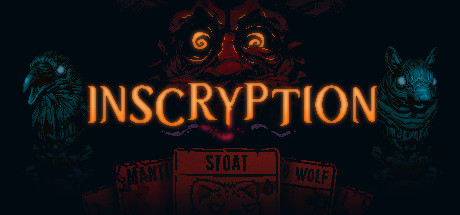
Inscryption
- Developed by
- Daniel Mullins Games
- Published by
- Devolver Digital
$19.99
Inscryption is an inky black card-based odyssey that blends the deckbuilding roguelike, escape-room style puzzles, and psychological horror into a blood-laced smoothie. Darker still are the secrets inscrybed upon the cards...
Consensus
S82.4/100
Steam players96.8% positiveOverwhelmingly Positive148,852 reviews
Metacritic ↗85/100Users: 8.5/10
VG Insights estimate ↗≈2.8M copies · ≈$39M gross
What creators say
Ranked Jul 2026 · #5 of 5 in that tierWatch the moment (0:24:50)
Ranked Sep 2024 · #7 of 21 in that tierListen to the episode
Scored 7.96/10 · tier derived from the score
Ranked May 2026 · #4 of 8 in that tierWatch the moment (0:13:45)
Ranked Apr 2026 · #4 of 11 in that tierListen to the episode
What players say
A deckbuilding roguelike from Daniel Mullins Games (published by Devolver Digital) that starts as a sacrifice-based card battler in a creepy cabin and keeps changing genre, blending escape-room puzzles, psychological horror and a meta-narrative across three acts.
Inscryption is one of the best-reviewed indie games of 2021: Steam shows Overwhelmingly Positive (about 96.8% of roughly 149k reviews), Metacritic critics score it 85 with users at 8.5, and it swept major awards (GDC Game of the Year and the IGF Seumas McNally Grand Prize, a first for both). Praise centres on atmosphere, the blood/bones sacrifice card system, inventive puzzles and a story that constantly subverts expectations. The consistent dissent is that Act 1 is the peak: Acts 2 and 3 and the ARG-style meta-story are seen by a minority as a pacing drop, a bait-and-switch from the store page, or repetitive. It is a finished game (not early access); the free Kaycee's Mod (Mar 2022) added an endless roguelike mode, and it later shipped on Mac/Linux and consoles. Most players urge going in blind.
Players love
- Act 1 atmosphere: the dark cabin, Leshy as a menacing card-game opponent, sound design and art style are repeatedly called one of a kind
- Constant surprise: the game shifts genre, rules and format, and players say it is far more than the store page suggests
- Sacrifice card system (blood, bones, scales) and sigils: easy to learn but with depth; the scale/tug-of-war damage mechanic was singled out by critics
- Escape-room style puzzles and hidden secrets woven into the deckbuilding, with a stupid amount of detail according to players
- Fourth-wall-breaking, meta storytelling and memorable characters (the four Scrybes); the ending handshake sequence is a fan favourite
- Replay value: Kaycee's Mod gives an endless roguelike mode, plus challenges, achievements and ARG content; some players report hundreds of hours
- Soundtrack and visual design: a twisted take on 90s floppy-disc adventure aesthetics (Eurogamer) and a well-loved OST
- Teaches mechanics through play rather than tutorials, making it approachable even for people who dislike deckbuilders
Common complaints
- Many say the game peaks in Act 1; Act 2 (8-bit 2D) and Act 3 (sci-fi factory with P03) lose the horror tension and charm
- Store page, trailer and demo show only Act 1, which a number of negative reviewers call a bait-and-switch
- The meta-narrative / ARG (Karnoffel code, live-action video footage, real-world references) is called convoluted, hard to take seriously or not worth the time
- Act 3 is seen by some as repetitive: map backtracking, many similar fights, and little downside to dying or save-scumming
- Acts 2 and 3 are felt to have low stakes since the game is linear and failure barely sets you back, unlike Act 1
- Tonal and mechanical whiplash: critics like PC Gamer said the eerie delight fades well before the end, and Destructoid said later chapters gripped less than the first
- Overall length and pacing: some find the later parts a test of endurance with too many new mechanics introduced at once
- The ending and overall story payoff disappoint some players: they expected branching outcomes or a stronger conclusion and felt the story was told shallowly or through a forgettable live-action framing
Can feel tedious
- Act 3's travel-fight-upgrade loop over a map, with back and forth between areas and many similar battles
- Act 2 mechanics that feel underexplained or exploitable, leading some to ignore the puzzle of deck building
- Decoding the ARG and Karnoffel code to understand the full story, which some find exhausting or unnecessary
What's unique
- A deckbuilder wrapped in a horror escape room: you get up from the table, inspect the cabin and solve puzzles that change your cards and rules
- Sacrifice-based costs (blood, bones, energy, gems) on a lane-based board with a scale for damage instead of player health
- Each act is effectively a different game with a different look and card economy, all framed by a fictional 'game within a game' mystery
- Meta-narrative that reaches outside the game (file manipulation, live-action footage, ARG codes, callbacks to Mullins' earlier games)
- Grew from a Ludum Dare 43 prototype (Sacrifices Must Be Made) and won both GDC Game of the Year and the IGF Grand Prize, a first
Players want
- Make Act 1 (the most loved part) longer or offer more content in that format, or a stand-alone mode built around it (Kaycee's Mod was the partial answer)
- Fully fleshed-out worlds and playable stories for Magnificus and Grimora, which fans say feel underdeveloped compared with Leshy and P03
- Make Acts 2 and 3 carry real consequences for failure, and trim repetitive map traversal and filler fights in Act 3
- Market the game more accurately, since store screenshots and trailers only show Act 1
- Clearer or more optional delivery of the lore; some reviewers wanted the story told more directly rather than through ARG-style puzzles
- Allow more player agency or alternate endings; some players expected branching outcomes that do not exist
Summarised from Steam reviews and community discussion.
Steam tags
Card BattlerCard GameStory RichDeckbuildingHorrorDarkPuzzleRogue-liteStrategyRogue-like
Similar games
More runs with shared subgenres and Steam tags.


Tier list Part 1 (2023)
Inscryption is a story-driven deck-building roguelike from the creator of Pony Island. He treats it as the biggest campaign-style game on the list, something to experience once, and he avoids spoilers. He thinks the story, puzzles and exploration are superb and calls the game a masterpiece even though the card gameplay is its weakest part. He places it in S tier, close to Enter the Gungeon.
Liked
Disliked