Part 3 (Apr 2025) · #6 of 14 in that tierWatch the moment (1:10:53)
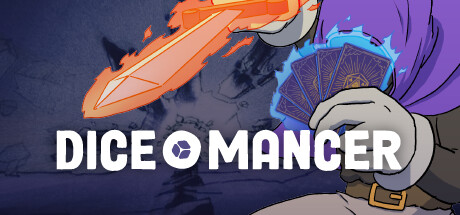
DICEOMANCER
- Developed by
- 超厚皮猪猪 Ultra Piggy Studio
- Published by
- Gamirror Games
$14.99
DICEOMANCER is a roguelike deck-building game. Though you long for a peaceful life, you're forced to embark on an adventure. In this world of swords, magic, and guns, make good use of your dice and deck to find a way back to tranquility! What can the dice be used for? To change... anything.
Consensus
B74.2/100
Steam players96% positiveOverwhelmingly Positive5,623 reviews
Metacritic ↗Users: 9.6/10
VG Insights estimate ↗≈354K copies · ≈$4M gross
What creators say
Ranked Mar 2025 · #37 of 48 in that tierListen to the episode
Scored 6.5/10 · tier derived from the score
Ranked Oct 2025 · #6 of 11 in that tierListen to the episode
What players say
A hand-drawn roguelike deckbuilder from Ultra Piggy Studio where you can replace almost any number on screen (enemy HP, energy, card values, gold, relic charges) with a dice roll, built around a five-colour mana system.
DICEOMANCER is an Overwhelmingly Positive Steam hit (about 96% of roughly 5,600 reviews, released Oct 9-10 2024 at $14.99). It reportedly sold 50,000 copies in two weeks, and estimates put lifetime ownership at 100k-200k. Players love the change-any-number gimmick, the class variety and the storybook art, and often pitch it to Slay the Spire and Balatro fans. The recurring complaints are that it is too easy and gets padded by a per-character ascension grind, that run variety and enemy design are thin, and that the developers have gone quiet with little or no post-launch content (several 2025-2026 reviews call it abandoned). Critic coverage is minimal: Metacritic has no Metascore yet (1 of 4 needed critic reviews) and OpenCritic has no findable entry, so reception is almost entirely player-driven.
Players love
- The change-any-number dice mechanic is seen as genuinely novel, and players enjoy gradually discovering how many numbers it can touch (enemy health, energy, gold, shop prices, event checks, relic charges)
- It lets you break the game in creative ways, for example a burn-everything deck or turning shop items into near-free purchases, which players say produces memorable stories
- Distinct classes with their own gimmicks and playstyles, and a large pool of cards (about 500) with unusual keywords like Load, Summon, Construct, Phantom and Flow
- The five-colour mana system, where you discard, exhaust and manipulate cards to pay for powerful ones, adds a Magic-like layer of decisions
- Hand-drawn storybook art with 8fps animation, a humorous tone (the goal is simply to go fishing) and a well-liked soundtrack
- Corruption/purple mist on the map pressures you to limit dice use while allowing backtracking, which is unusual for the genre
- Strong value for players who like Slay the Spire, with some reviewers saying it surpasses it in places; 20-30 hours of fun is a common estimate, and some players log 70-200+ hours
Common complaints
- Too easy: overtuned cards, easy energy and draw, and stockpilable dice charges let experienced players delete bosses, sometimes on turn 1
- Balance is uneven between classes (Builder and Berserker are named as strong; red classes can feel samey), and every class tends to have a run-breaking card or two
- Limited enemy variety; outside a handful of bosses, enemies barely matter and you can ignore their intents
- Little or no post-launch support; multiple reviews from 2025-2026 say the developers disappeared and did not expand a great concept
- Content can feel thin for the price; one reviewer beat it in about 6 hours, and another said to wait for a sale
- Complexity and keyword overload make the early hours confusing for some, with the demo cited as confusing
- Some players say the dice gimmick is over-hyped in trailers because in most cases you only use it for things like cutting huge boss HP to a small number
- A few reviewers find early enemies scaling too harshly or off-colour mana generation frustrating, which is the opposite complaint to the too-easy camp
Can feel tedious
- The 20-level ascension ladder has to be repeated for each character, which reviewers call artificial padding when runs are all similarly easy
- Runs can feel samey for classes that want a tiny deck, because you skip most card rewards
- Enemies repeat often and feel largely irrelevant outside a few bosses, so runs play out as executing the combo you built
- Some players dislike the dice mechanic as too game-defining or feel it trivialises the game, and a minority complain that dice feel rigged or rolls look seeded after restarting (an anecdotal claim in one review)
- Keyword overload and complex cards make the early hours hard to parse (even the demo is cited as confusing)
What's unique
- You can swap almost any on-screen number for a die roll, including meta-genre numbers like cards per turn, reward choices and exhaust, which reviewers describe as commentary on deckbuilder tropes
- Origin as the GMTK 2022 game jam entry Dice is the Way, which placed in the top 20 of more than 6,000 entries
- Five-colour mana with a purple dice/chaos colour and cards that double as resources
- Enemies with multiple health bars and a spreading purple fog that punishes dice use, balancing the power of the mechanic
- Backtracking on the map, which most roguelike deckbuilders do not allow
- Whimsical fishing-trip premise in a world with swords, magic and guns, plus a fully hand-drawn art style
Players want
- Add new content (enemies, cards, events, upgrades); veteran players with 130+ hours specifically ask for new enemies
- Add harder late-game difficulty: a fourth act, harsher ascension scaling and more meaningful modifiers
- Share ascension progress across characters instead of making players climb 20 ascension levels separately for each of the six classes
- Give a reason to linger in corruption or explore the map, such as rewards or new cards for taking risks
- Put some limit or cost on stockpiling dice charges and on altering non-card numbers so the core mechanic stays tense
- Improve enemy variety and make enemy intents matter more, and tune class balance
Summarised from Steam reviews and community discussion.
Steam tags
StrategyCard GameCard BattlerRoguelike DeckbuilderColorfulRogue-likeDeckbuildingFirst-PersonSingleplayerIndie
Similar games
More runs with shared subgenres and Steam tags.




Tier list Part 3 (2025)
Diceomancer is a hand-drawn, first-person deck-building roguelike where some cards use dice and a core mechanic lets you turn any number on screen into a d6 roll. He finds the visuals, animation and immersion charming and the central mechanic surprisingly well balanced. He warns it is complex and not ideal for deck-building newcomers, and that some balance issues are inherent. He places it in a solid spot in A tier, likely above Arkham.
Liked
Disliked