 Roguedex
Part 1 (Sep 2023) · #4 of 14 in that tierWatch the moment (2:13:59)
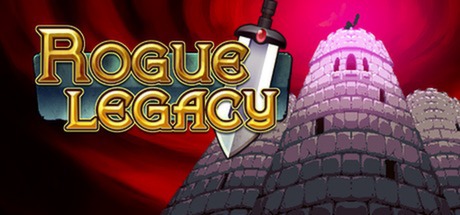
Rogue Legacy
- Developed by
- Cellar Door Games
- Published by
- Cellar Door Games
$14.99
Rogue Legacy is a genealogical rogue-"LITE" where anyone can be a hero. Each time you die, your child will succeed you. Every child is unique. One child might be colorblind, another might be a dwarf with vertigo. But that's OK, because no one is perfect, and you don't have to be to succeed.
Consensus
C70.3/100
Steam players92.3% positiveVery Positive18,856 reviews
Metacritic ↗85/100Users: 7.8/10
VG Insights estimate ↗≈1.7M copies · ≈$15.4M gross
What creators say
Ranked Aug 2024 · #8 of 10 in that tierWatch the moment (0:53:42)
Ranked Dec 2019 · #1 of 2 in that tierWatch the moment (0:28:18)
Ranked Nov 2024 · #2 of 3 in that tierListen to the episode
What players say
A 2013 side-scrolling action-platformer rogue-lite from Cellar Door Games where each death passes the castle to a randomly generated heir with quirky traits, while gold spent between runs permanently upgrades the family.
Rogue Legacy is received as a genre-defining, highly addictive early rogue-lite. Critics scored it in the mid-80s (Metacritic 85 from 43 reviews, with 9/10 from IGN and Polygon), and Steam players rate it Very Positive at about 92% of roughly 18.9k reviews. Praise centres on the heir/trait system, the permanent progression that softens permadeath, and the 'one more run' loop. Modern players are more split: many call it dated, grindy and clunky next to newer roguelite-metroidvanias, and often point to Rogue Legacy 2 as the better version. It is a finished, fully released game (Steam 2013, later ported to consoles, Switch in 2018, iOS in 2019), not early access.
Players love
- The heir system: each death gives a choice of three randomly generated children with different classes, spells and traits, which turns failure into a comic, varied start to every run.
- Permanent progression softens permadeath: gold spent in the manor upgrades stats and unlocks gear and runes, so even failed runs feel productive.
- A highly addictive 'explore, fight, upgrade, repeat' loop with short runs (20-30 minutes) that suits casual sessions.
- Bosses stay defeated and their castle locations are fixed, so progress is permanent (one Steam reviewer who dislikes roguelites called this the deciding factor).
- Humor and charm: quirky traits, jokes and a colourful retro art style give the game personality.
- Smooth retro combat and a trait system regarded by some players as one of the best in the genre.
- Plenty of content, including New Game+ with escalating difficulty, and a 100% completion goal.
- Critics gave it near-unanimous praise (42 of 43 Metacritic reviews positive), and it is remembered by players as a modern classic that helped start the roguelite craze.
Common complaints
- Controls and movement feel loose or clunky to some players, described as sliding on ice, while the game expects precision against many projectiles.
- Repetitive content: room layouts and enemies recur, and critics and players say many enemies are reskins or upgraded variants of a small set.
- Upgrade costs climb steeply, so a lot of gold farming is needed to keep up with enemy scaling.
- Difficulty comes more from enemy quantity and cheap room setups (being swarmed in the first room, awkward platforms) than from smart level design.
- Some traits are poorly explained or are just visual effects with little gameplay impact, and classes can feel negligible in practice.
- The randomness does not always synergize with the platforming, which can produce unfair runs.
- Aged mechanics: players compare it unfavorably with the many modern indie metroidvanias and with the sequel.
- Many reviewers say the sequel, Rogue Legacy 2, improves on the original so much that the first game feels hard to go back to.
Can feel tedious
- Gold grinding: farming money run after run for increasingly expensive upgrades, especially when stuck on a boss.
- Unspent gold being lost each run annoys some players who do not want to be forced to spend it.
- Repetitive rooms and enemies after many hours.
- Having to play an unwanted class or heir when the three options offered are not appealing.
- Clunky controls, particularly keyboard and mouse default bindings, where controller is advised.
- Harsh, unwelcoming onboarding for newcomers, with a few players also citing projectiles or enemies passing through walls and unreliable downward-thrust attacks.
- No way to reset upgrades, and enemy scaling makes the grind feel mandatory rather than optional.
What's unique
- The genealogical premise: you play a family dynasty, and every heir has randomized traits such as colour-blindness, ADHD, vertigo or dwarfism that change play.
- Gold does not carry over unspent: it is lost on entering the castle, so every run opens with a spending decision at the manor (the game's signature loop, sometimes criticised as a lock-in).
- The architect can lock the castle layout and bosses have fixed locations, giving rogue-lite procedural rooms with metroidvania-style permanent boss progress.
- Dark Souls and Spelunky-inspired design goals but with 'forgiving and accessible' persistent progression, which made it a template for later rogue-lites.
- New Game+ scaling and a humorous tone set it apart from grimmer roguelikes.
Players want
- Tighter, more responsive movement and platforming control (a recurring complaint from critics and players).
- More enemy variety and less reliance on reskinned foes.
- Better explanation of what traits do, and more traits and classes that change how the game plays.
- A way to respec or reset upgrades to try different builds (a Steam reviewer specifically asked for this).
- A gentler or less grind-heavy upgrade cost curve and more meaningful upgrades than raising attack or health.
- A modern refresh: several players say the sequel already delivers this and that the first game deserves a proper revisit.
Summarised from Steam reviews and community discussion.
Steam tags
RoguevaniaPlatformerRogue-likeIndieAction RoguelikeActionSingleplayer2DMetroidvaniaRPG
Similar games
More runs with shared subgenres and Steam tags.


Tier list Part 1 (2023)
Rogue Legacy (2013) is a classic 2D action-platformer roguelite where each death hands you a new heir with random quirks, and the castle is gradually explored and upgraded. He completed it long ago, including secret and hard-mode bosses, and had a blast then. On a recent replay he felt it has not aged well and the combat is clunky. He credits it for helping revive the roguelike genre, but rates it C because better games exist today.
Liked
Disliked