 Roguedex
Part 1 (Sep 2023) · #16 of 18 in that tierWatch the moment (2:26:12)
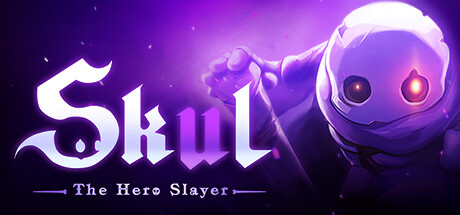
Skul: The Hero Slayer
- Developed by
- SOUTHPAW GAMES
- Published by
- NEOWIZ
$19.99
Guide 'Skul' on his quest to single-handedly take on the Imperial Army and rescue his King from captivity, in an action-packed rogue-lite 2D platformer for the ages.
Consensus
A76.2/100
Steam players93.3% positiveVery Positive57,660 reviews
Metacritic ↗80/100Users: 7/10
VG Insights estimate ↗≈1.7M copies · ≈$22.2M gross
What creators say
Burr
ARanked Apr 2022 · #4 of 5 in that tierWatch the moment (0:21:37)
Ranked Jun 2023 · #2 of 17 in that tierWatch the moment (0:47:25)
Ranked Apr 2023 · #16 of 16 in that tierWatch the moment (2:03:54)
Ranked Apr 2025 · #4 of 8 in that tierWatch the moment (1:12:09)
What players say
A 2D action roguelite platformer by SouthPAW Games (published by Neowiz) where you play a skeleton who swaps between dozens of skull 'classes', each with its own attacks and skills, to fight the human Imperial Army.
Skul is received as a very good, Dead Cells-adjacent action roguelite: Steam shows Very Positive (about 93% positive across roughly 57,700 reviews; about 92% in the store's English/recent view) and Metacritic has a Metascore of 80 from 22 critics. Praise centers on the skull-swapping combat, build variety, pixel art and surprisingly good story. Criticism is that it is punishing with a steep difficulty curve, heavily RNG-driven, and repetitive once the novelty fades, with clunky keyboard controls and screen clutter. The Metacritic user score is noticeably lower (7.0, Mixed) than Steam, suggesting the harder-edged/grindy side bites some players. It is not abandoned: after 2020 early access and the Jan 2021 full release, it got console ports, a Mythology Pack DLC, mobile versions (2024), and Steam reviews still run 'Very Positive' recently; Wikipedia reports over 2 million copies sold by Dec 2023.
Players love
- Skull-swapping is the core hook: you carry two skulls at once and swap mid-combat, and each skull (Grim Reaper, Davy Jones, Monkey King, etc.) plays very differently, so runs feel distinct.
- Large variety of skulls, items and Quintessences that interact with each other, giving real theorycrafting and build depth; some players report hundreds of hours without feeling stale.
- Pixel art and sprite work are repeatedly called beautiful and detailed, with distinct visual themes per zone and memorable bosses.
- Story and tone surprised many reviewers for an action roguelite; several say it is emotional and has twists, with a serious-but-charming tone compared to Dead Cells' wackiness.
- Bosses start out feeling impossible but become learnable pattern fights that players describe as rewarding.
- Runs well on low-end PCs and on Steam Deck, even though it is not officially verified there; Steam reviewers report 40+ hours with excellent performance.
- Post-launch content is well regarded: one reviewer says the Mythology Pack DLC added four new skulls plus a very strong legendary skull; the soundtrack is also singled out as fitting the theme.
Common complaints
- Difficulty is steep and unforgiving, with no easy mode; many negative reviews cite hitting a wall at bosses or around zone 4 and quitting.
- Heavy RNG in items and skulls can make good builds hard to assemble and can doom a run outright.
- Repetition: same enemies and layouts across runs, and meta-upgrades feel slow or small after the first hours, which produces 'fun for a few hours then a grind' reviews.
- Keyboard controls are widely described as poor (remapping needed); controller is strongly preferred.
- Screen clutter and over-animated skills/effects can cover much of the screen and make dodging hard; some call combat feel floaty or lacking weight.
- Balance and pacing issues: some bosses take far too long (one reviewer spent 10 minutes in a single fight) and some players call the balancing and screen clutter among the worst they have seen.
- Some item and system descriptions are overwhelmingly long or poorly explained, and build-enabling mechanics are not well signposted in-game.
Can feel tedious
- Restarting from the very beginning after losing to a boss, fighting the same early enemies again, which several reviewers call exhausting.
- Grinding for upgrades between runs; one player says multiple runs are needed per upgrade after about nine hours.
- Long boss fights with heavy health pools (one reviewer describes a ten-minute fight).
- Reading dense item and inscription text, and needing fan guides to understand builds.
- Level layouts and enemy sets feeling repetitive across zones and runs.
What's unique
- The playable character is a skeleton who swaps heads: each skull is effectively a class with its own moveset, and you hold two at once and switch mid-fight.
- Skull rarity tiers plus a growing roster from bosses and story (including fan-favorite legendary skulls) create a collect-and-mix loop unlike most 2D roguelites.
- Quintessences (active items) and item synergies sit on top of the skull system for a three-layer build structure.
- Dark Quartz corruption adds a challenge layer for late-game and boss encounters.
- A darker, more serious narrative with a villain-adjacent twist on the fantasy trope of heroes versus monsters, which reviewers say is more story-driven than typical roguelites.
Players want
- Add an easier or assist difficulty, or a gentler on-ramp, for players who want the content without the punishment.
- Better in-game explanation of systems (Quintessences, inscriptions, item synergies) with shorter, clearer descriptions so players do not need outside guides.
- Reduce run-killing RNG through more reliable ways to shape builds and more useful low-tier items.
- Improve default keyboard layout and controls, and lower screen clutter or add effect-reduction options.
- Faster, more meaningful meta-progression so early failed runs feel less like a repetition loop.
- More big content updates; one reviewer says the only issue is the lack of major updates.
Summarised from Steam reviews and community discussion.
Steam tags
IndieActionAction RoguelikePixel Graphics2DRogue-likeRogue-liteSingleplayerPlatformerMetroidvania
Similar games
More runs with shared subgenres and Steam tags.

Tier list Part 1 (2023)
Skul: The Hero Slayer is a traditional 2D action roguelike where you play a small skeleton who swaps skulls, each with a distinct playstyle and abilities. He finds it fast, explosive and very satisfying, and he has kept playing since release, including a paid expansion DLC. His main complaints are a repetitive early game with the same starting skull, limited pre-run customization, and reused bosses across worlds. He places it firmly in A tier, above Have a Nice Death and roughly just under FTL.
Liked
Disliked